

To understand our position on unions, it is helpful to know not only what a union is but also what it is not.
A union is not a charity, club, or social organization.
A union is a business.
- Unions represent their members in dealings with employers. In return, unions charge fees for their services (typically in the form of dues and initiation fees). These fees are often deducted directly from employee paychecks. The main source of funding for unions is dues, fees, and assessments paid by their members.
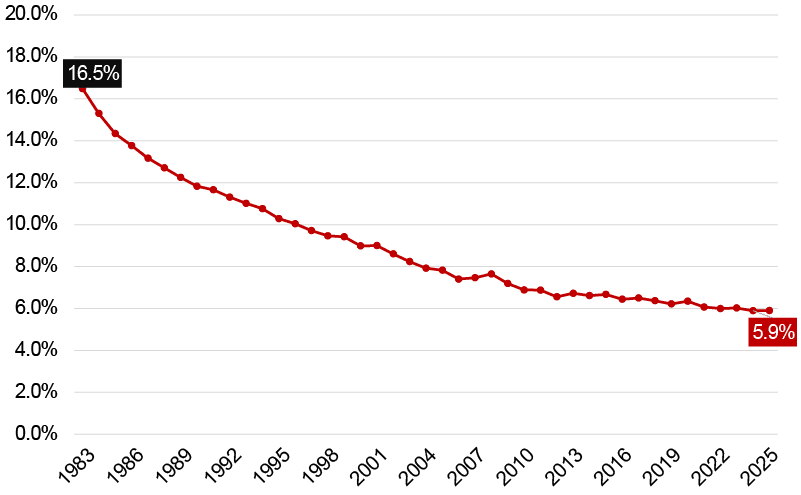
- Today, less than 1 in 10 workers in the private sector belong to a union. Like any business, unions need a revenue stream to stay in business. This revenue comes from dues-paying members. Many unions need new members to survive.
- The more members unions have, the more membership fees and dues they can collect. They have a vested interest in convincing you to sign up to be a member.
Union Membership
(Private Sector)
What a Union Can and Cannot Do
A Union CAN:
- Collect dues, fees, fines, and assessments from their members
- Negotiate and make proposals during collective bargaining
- Represent all employees in the bargaining unit, including those who voted against the union
- Decide whether or not to act on a union member’s grievance
- Discipline members, issue penalties, or fine union members who violate the union’s rules
A Union CANNOT:
- Guarantee a union contract
- Guarantee higher wages or a pay increase
- Guarantee better or less expensive benefits
- Guarantee hours or more paid time off
- Prevent layoffs
- Prevent discipline or termination for just cause
- Force SSM Health to fire or transfer managers or supervisors